

5 Thought-Provoking Parenting Books to Read Now
DISCLOSURE: If you purchase products using links through this site, we may make a small commission at no additional charge to you.
When you know better, you do better.
If you read my post last week, you’ll know that I am an avid reader. Even with three little kids, I manage to check books out of the library for myself and read them. Going into motherhood, I wanted to know all the things. I love research, and no stone was left unturned for the “best” information out there. I knew how critical those early years were for my children. And I also realized I couldn’t make a well informed decision if I wasn’t… well informed. When you know better, you do better.
I quickly realized how hard breaking generational cycles would be.
Parenting is hard. Parenting is especially hard if you’re going against the grain of society. If history tells us anything, it’s that new ideas are often treated as heresy. My first child was only ten days old when someone first openly criticized my parenting choices. At that moment, I realized I needed to empower myself with knowledge to continue breaking down the walls of generational trauma.
So how do we change the world?
Society isn’t set up in villages anymore. There’s no wise woman sharing her wisdom with the new moms. Besides, I’ve seen the village and, as it stands, I don’t want it raising my children. My guess is neither do you. So what’s a new mom to do with nothing more than an ambition to break generational trauma? Read.
In my seven years of parenting, I’ve read a lot of great books and some total duds. But because not everyone has time to sit and read all the literature on parenting, I’m giving you a list of my five favorite parenting books that have the power to change the world. (If only enough people would read them.)
Let’s do this!
The Whole Brain Child
The Whole Brain Child was my first foray in the parenting genre. It can be a bit science-y in the beginning, but for good reason. It helps parents understand how their children’s brains are wired, which reframes expectations of normal childhood behavior. The book also gives examples of the different types of typical childhood behavior and how to tactfully (and respectfully) manage it. Using the correct approaches for each behavior, we can help both hemispheres of our children’s brains connect and grow. Honestly, if this book were around when Boomers were parenting, there would be a lot less people in therapy right now.
A hugely helpful takeaway for me was the difference between upstairs tantrums and downstairs tantrums. A kid having an “upstairs” brain tantrum knows what they’re doing and being firm and fair can diffuse it pretty quickly. A “downstairs” tantrum is a totally different beast and requires a completely different approach. Another thing I loved about this book was the chart in the back for addressing different behavioral issues and connecting the hemispheres by age. This book is great to read in the beginning of your parenting journey because there are a lot of things happening neurologically, and it’s helpful to understand the different stages before you get to them.
Trendsetter Pick

We earn a commission if you make a purchase, at no additional cost to you.
02/05/2024 08:57 pm GMT

The Danish Way of Parenting
Sometimes you read a book, and it gives you new ideas on how to approach a situation or developmental stage. Other times, you read a book and feel completely validated that your beliefs align with a lot of other people. The Danish Way was the latter for me. Written by a US mama who married a Dane and became an expat, this book provides a critical insight into what Danish parents are doing. And let’s be real – they must be doing something right. It isn’t a coincidence that Scandinavian countries consistently rank as the happiest countries on earth. It certainly isn’t the weather.
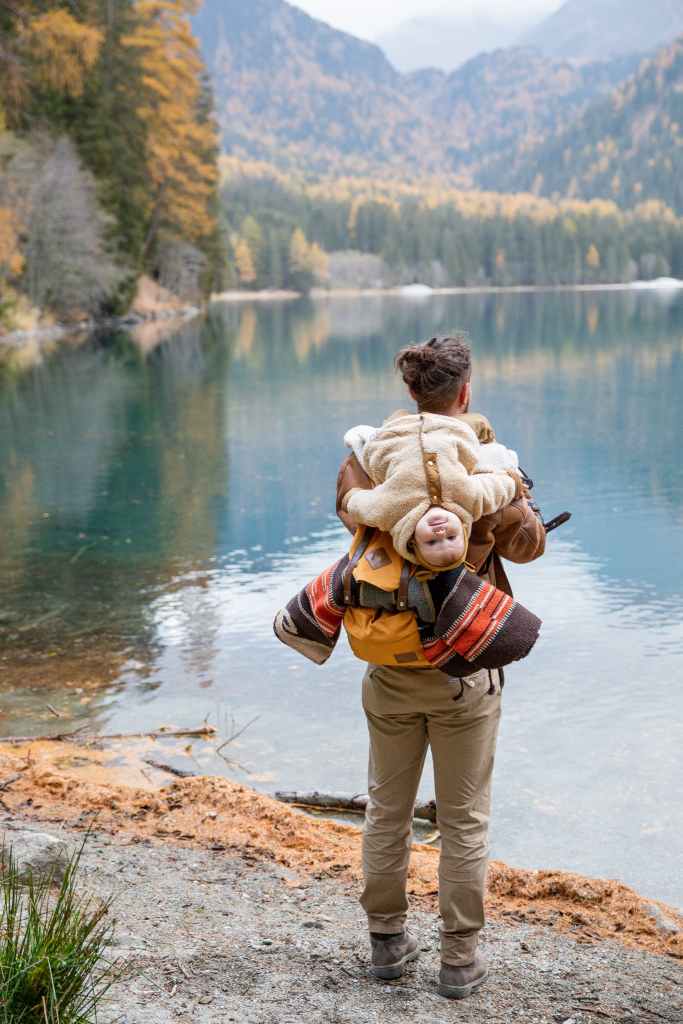
I loved the entire book, but particularly agreed the “Authenticity,” “Reframing,” and “Empathy” chapters. I so wish the United States would stop forcing academics on five-year-olds and, instead, focus their time and energy on encouraging pro-social behavior. And not in a “do this or you’ll sit in timeout” sort of way. Authenticity? Americans struggle with this in a big way and I’m not entirely sure why. Relationships are built on trust and it’s infinitely easier to trust an authentic person. Maybe that’s why we’re so lonely as a culture.
Another hugely important topic addressed: togetherness. Celebrating life together. Hygge. Cooking meals. Playing games. And the simple act of family traditions. Not enough attention gets paid to this topic in America – with moms who prioritize creating special moments labeled as “Pinterest” moms.
It feels like being together has been lost and replaced with hustle culture. Our society values being busy just for the sake of it. Those people must be important, we think. Family traditions seem to be a foregone nicety. But it isn’t just a nice thing to do. Family traditions weave our families together and those traditions form a strong foundation for our children, which improves their mental health and sense of belonging.
Trendsetter Pick

We earn a commission if you make a purchase, at no additional cost to you.
02/05/2024 08:16 pm GMT
It’s Okay Not to Share
It’s Okay Not to Share is a book based on the teachings of a lone preschool in Ohio. Many of the topics discussed in the book are contrary to currently acceptable social norms – as an example – sharing.
The author explains that when sharing is forced upon children, it isn’t at all aligned with how the real world works. And it makes zero sense. A stuffed toy to a child is the equivalent to any adult valuable – it is their possession. Forcing them to share their thing makes no more sense to a kid than giving someone your thing just because they want a turn with it. I cannot go down to my neighbor’s house and demand a turn with their tractor because ours is in the shop.
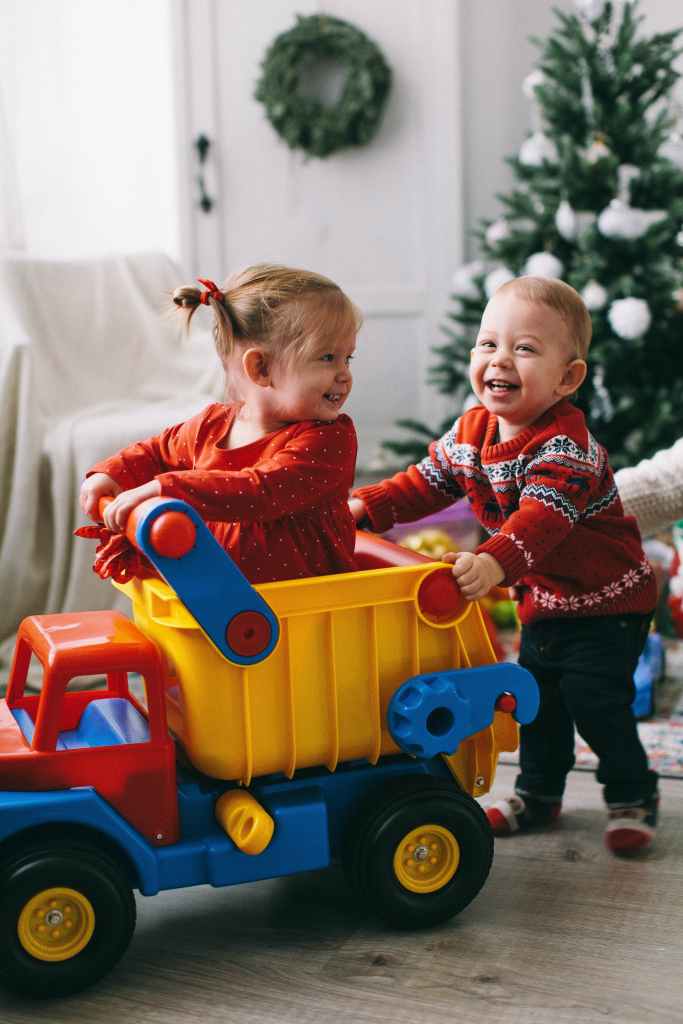
Just think about how forced sharing would play out as an adult: would you hand over the keys to your BMW minivan just because someone else insisted it was their turn? That sounds bananas, doesn’t it? Besides which: what does it teach in society? It teaches one kid that their feelings don’t matter, and the other kid that if they sufficiently flip their shit, they’ll get their way. Neither thing is necessarily true and sets kids up for a lot of frustration down the line. Instead, it proposes “long turns” and a “no taking” policy.
Even though my brother-in-law raked me over the coals for it, we’ve used the long turns/ no taking policy very successfully in our house for seven years and we implement it everywhere we go. My children know not to take from others. But that’s only half the battle. There have been many times at children’s museums where other parents told their child(ren) to “share” what they were playing with. At this point, I always say to my child (and the other) “this kid is having their turn right now, we’ll check this toy out in a little bit.” Similarly, I try really hard to protect my children’s right to play and I don’t make them give over their toy. At a museum, they can’t have a forever turn, so we give them a time limit and tell them it’s the next kid’s turn when we notice others encroaching. This makes it less about “sharing” and more about being respectful of everyone’s right to play.
Now the big question: does it work? I’d say yes. I once watched my oldest daughter (then 5) take off her gloves on a snow day and give them to her friend (even when her own hands were turning to icicles). I have a ton of examples in my back pocket, but that seems like the most glaring at the moment. Is it perfect? No. They still fight. But they all know the ground rules and seem to feel as if they’re being treated fairly.
It’s Okay Not to Share covers many socially “taboo” topics, and offers more thoughtful and sensible ways to navigate hard situations. Some of my favorite advice includes allowing all feelings (not all behavior), long turns, avoiding forced apologies, and allowing kids to wrestle (and self-handicap).
Trendsetter Pick

We earn a commission if you make a purchase, at no additional cost to you.
02/05/2024 11:08 pm GMT
How to Stop Losing Your Shit with Your Kids
If there’s one parenting book that has the power to change the world on it’s own, it’s this one. I don’t want to say too much about it because I want everyone to read it for themselves. Hilarious and highly relatable, this is my favorite parenting book. Bar none. I’ve read this book in its entirety once, and I’ve re-read sections at least twice. If Carla Naumburg is half as good a clinical psychologist as she is writer, she deserves a Nobel Peace Prize for her work with families.
This book reminds us that we’re all human, and that no matter how much we love our little people, they will push our buttons. It’s about identifying our triggers, and figuring out how to diffuse them before we completely lose our cool in the grocery store. Had our parents used the Whole Brained Child approach, we’d all have our brain hemispheres integrated and probably wouldn’t need this book. But they didn’t, and we do. While most parenting books focus on strategies to use during your child’s meltdown, Naumburg focuses on teaching you what you need to avoid an adult meltdown altogether. This book has even helped my marriage on occasion!
Trendsetter Pick
How to Stop Losing Your Sh*t with Your Kids: A Practical Guide to Becoming a Calmer, Happier Parent
$15.18

We earn a commission if you make a purchase, at no additional cost to you.
02/05/2024 10:15 pm GMT
Free to Learn
Clinical psychologist and dad, Dr. Peter Gray, was looking for an alternative type of education for his youngster. His search brought him to the Sudbury School in Massachusetts – a profound educational experiment modeled after the tenets of unschooling. Dr. Gray gives the history of why and how the school system was established as it was, but presents research into why it doesn’t work, why it creates the chaos we see in our societies, and how to do it differently. The last piece of this is hugely important as lots of people complain about the school system being problematic, but few offer alternatives.

Whether you’re considering homeschooling, or know you will certainly send your children to an institutionalized school system, Free to Learn is a fantastic and thought-provoking read. Not all kids fit the school system model, and having that knowledge before you wade into any educational waters is an invaluable gift. I’d even argue that most teachers go into teaching hoping to use the unschooling / individualized model to education, but are held hostage by red tape and bureaucracy.
Nonetheless, Free to Learn decouples us from thinking education can only fit a certain model. The model we’ve all been conditioned to believe “works,” while simultaneously complaining how it doesn’t work at all. And it corrects the belief that if it doesn’t look the way we are accustomed to, it isn’t legitimate.
Trendsetter Pick

We earn a commission if you make a purchase, at no additional cost to you.
02/05/2024 09:57 pm GMT








One Comment